
‘A hatchet job’ or a trust that went too far? Inside Athena after BBC Panorama

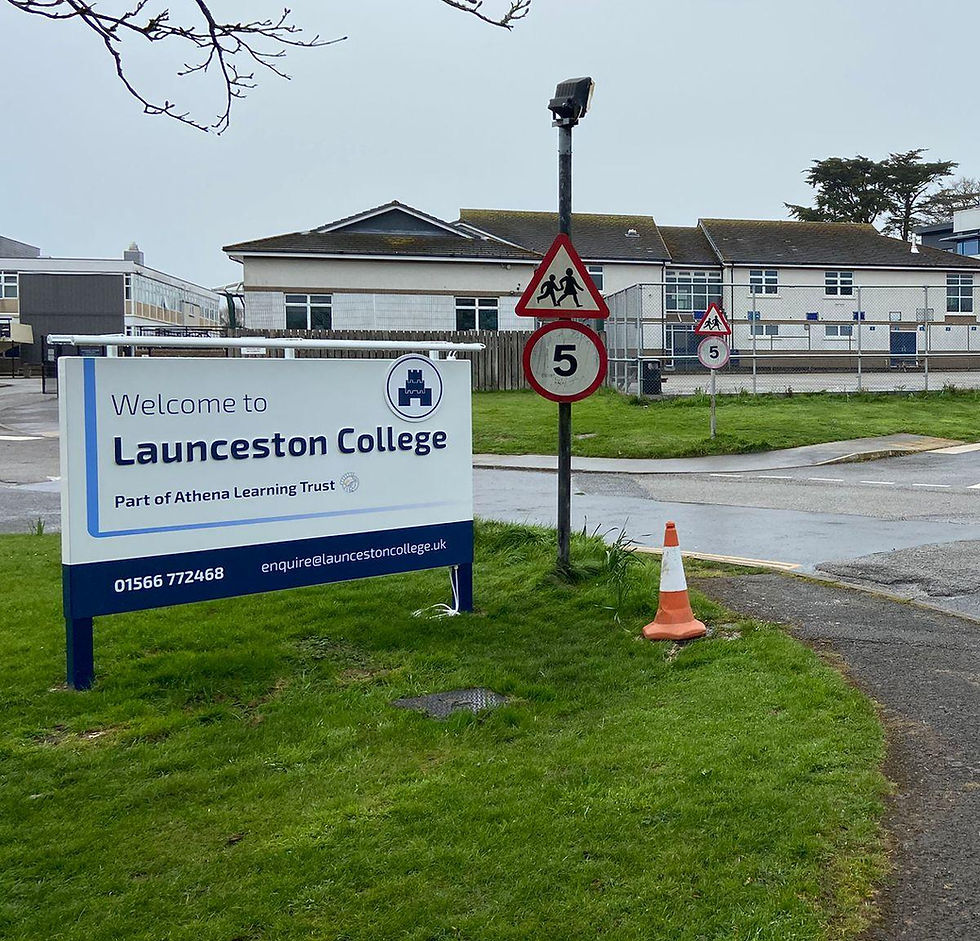
By Teachers Talk Radio · 10 August 2026 · Long read · 15 min
Current and former Athena staff have spoken to Teachers Talk Radio following Britain’s Strictest Schools. Their accounts reveal areas of agreement, stark contradictions and a picture that is considerably more complicated than the one presented on BBC Panorama.
Teachers Talk Radio has been contacted by a number of current and former members of staff from the Athena Learning Trust following the broadcast of the BBC Panorama programme Britain’s Strictest Schools.
The BBC One documentary featured pupils, parents and former teachers describing life under Athena’s behaviour policies, which have been criticised as “authoritarian”, “dystopian” and “cruel”.
Panorama heard from pupils who described feeling anxious and under constant pressure, while former teachers argued that the trust’s approach to discipline had gone too far despite improvements in exam results. The programme also highlighted suspension rates, the use of in-school “reflection” rooms and concerns about the impact of policies on pupils with special educational needs. But the programme also provoked a significant backlash.
On Teachers Talk Radio on Monday, and in the days since, many teachers and school leaders have argued that Panorama presented a one-sided picture and failed to fairly represent staff, parents and pupils who supported some or all of Athena’s approach.
The reaction on social media has been similarly polarised.
Former headteacher John Cosgrove accused politicians defending the trust of pinning their colours “to the mast of making children ill and denying them education.”
A Cornwall teaching head, posting as KernowTeachingHead, wrote:
“Athena took things too far. School was miserable for all children and staff… No one is arguing for no standards and no accountability. But proportionality is key.”
Behaviour specialist Tony Sammon observed “a noticeable anxiety from parts of the knowledge-rich/science of learning world” as those approaches faced greater public scrutiny. Others strongly rejected Panorama’s portrayal.
Michaela Community School headteacher Katharine Birbalsingh argued that “the national scandal is that the parents campaigned against the school. The school trust has been disbanded as a result. All that amazing learning is no more.”
Shadow Education Secretary Laura Trott MP described it as “unacceptable that an academy trust has been hounded out of providing high quality education”.
Senior school leader Fay Guest called the programme “appalling” and “1-sided”, while parent Steve Nuth, whose three children attended an Athena school, said the documentary was “very one sided” and that “discipline has caused a better learning environment.”
Rather than attempt to settle that argument from the outside, Teachers Talk Radio has sought the experiences of people who have actually worked within Athena.
We have now heard detailed accounts from four teachers: two current and two former members of staff. Two of them worked at Camborne Science and International Academy, allowing us to compare dramatically different accounts of the same school.
We have also seen internal staff communications (some of which we share in this article) concerning some of the policies at the centre of the controversy and offered Athena Learning Trust the opportunity to respond in full.
Some controversial practices are acknowledged even by staff who strongly defend Athena. Other claims are disputed. Some policies appear to have changed. Some schools appear to have operated differently from others.
And sometimes two teachers looking at the same system simply reach completely different conclusions about it.
Current staff member: ‘Looked like a hatchet job’
The first current Athena teacher who contacted Teachers Talk Radio asked to remain anonymous.
They have worked within Athena for nearly a decade and have 20 years’ experience in teaching.
Their assessment of Panorama was highly critical.
“It failed to mention the national SEND crisis - the lack of funding and access to support - instead laying it solely at the door of the school. I'm not saying any school gets it right, because I don't think that's totally true but it's a much more nuanced situation than the programme indicated”
Their conclusion:
“Looked like a hatchet job rather than an in depth exploration of where we are and WHY we're there”
They also questioned whether the parents most vocally opposed to Athena necessarily represented the wider school community:
“Some of the most vocal parents I'm aware of are those whose children have been permanently excluded for very sound reasons (and have repeatedly disrupted the school afterwards), or whose children have long since left (with good GCSEs).”
Reflection
The teacher did not deny that reflection is a significant part of the behaviour system.
They said its operation had changed:
“Students used to do homework in reflection, but there are now booklets prepared by heads of faculty for students to work on. In the case of students on a reading intervention programme, they can come out of reflection for that lesson. It depends on the individual student and what happened.”
That idea - "yes, something existed, but it has since changed" becomes important when comparing the different accounts.
‘Some days were intense’
One claim confirmed by this current member of staff concerns the frequency with which senior leaders entered classrooms.
They told us:
“SLT used to have targets to visit classrooms 100 times a day, That once was the case - and it hit my department HARD, but it's long gone. The max is now once per lesson. I'm not sure how long it lasted. Some days were intense. Some people really hated it”
The employee therefore does not dispute that very frequent classroom visits took place. Their argument is that this is no longer representative of current practice.
Were lessons silent?
They also pushed back on descriptions of Athena schools as places where pupils sat silently throughout lessons.
“It’s not a policy per se. We are expected (where appropriate) to have 20 min silent practice, but that’s not in one whole chunk necessarily and not appropriate for every subject. When it was first introduced a few years ago, that’s what was required, but it quickly changed when they realised it didn’t work. We haven’t had enforcement silent practice ever. I have been there for nearly a decade”
Nudges, reminders and reflection
They described behaviour management as a staged process rather than pupils immediately being removed for minor distractions.
“Behaviour management wasn’t accurately reported either. We use “nudges” which might be unnamed (non verbal gestures for example) or named (Billy, please sit up), and then if something is disruptive/intentional/persistent, it might go to a named reminder with a micro script to help the teacher, then to a reflection”
The true/false briefings
The employee also confirmed another practice described by former staff: true/false-style exercises during staff briefings.
But again, their interpretation was much less negative.
“True/false as a recap but not for ages. Things like “shouting out is a reflection” and we’d be expected to know it was a named reminder not a reflection (on its own)”
Asked about claims of children being shouted at during greetings or line-ups, they said:
“Shouting during greeting is not something I’ve witnessed and I’ve worked with several heads of year”
And:
“Raised voices in order to be heard, but I’ve not witnessed shouting”
The toilet controversy
Few parts of the Panorama programme have prompted as much discussion as access to toilets.
The current teacher told us that the experience of their school was not accurately reflected by a simple suggestion that pupils were forbidden from going.
“I’m a teacher at an Athena school. There was lots left out of the Panorama programme, including how not all the Athena schools were/are the same. We never ever say no to the toilet, for example. We do discourage the first and last ten minutes of a lesson, but not an outright no, and this has been covered in CPD"
Teachers Talk Radio has also seen internal staff communications concerning toilet use:

One communication asks staff to discourage pupils leaving during parts of lessons but also explicitly states:
“Obviously if they look in discomfort please allow them to go...”
It lists legitimate reasons for pupils being out of lessons, including toilets with a pass, first aid emergencies, counselling appointments and music lessons.
A second communication explains why toilet visits are recorded on Bromcom.

It says the records are being used both for safeguarding purposes and to identify pupils who appear to need the toilet unusually frequently, allowing pastoral staff to contact parents and, where appropriate, suggest seeking medical advice.
These emails do not settle the argument about how restrictive the rules were in practice. But they do add context to what staff were being told.
Former Launceston teacher: ‘In the beginning, we believed’
A former member of staff at Launceston College provided Teachers Talk Radio with a six-page account of their experience and asked to remain anonymous.
Perhaps the most striking part of their testimony is that they do not describe somebody who opposed Athena from the outset.
Quite the opposite.
“It’s all really sad. In the beginning, we believed. We really believed.”
They said:
“I believed in the consistency of routines, the clarity, the curriculum rationalisation, and the progress towards more effective pedagogy. It was great and it was clear and it was organised with some autonomy and two-way conversations.”
But they believe the culture changed.
“But when authoritarian leadership is mistaken for authoritative leadership it becomes controlling, not leading. This was what Athena Launceston became.”
They characterised the problem as one of “BLUNT CERTAINTY”.
Their document argues:
“Launceston and Athena’s notoriety is because “blunt certainty” was employed by those with “power” towards teachers, admin staff, students and parents. “Wisdom” was ignored.”
Daily staff practice
Their account of daily staff briefings overlaps substantially with the current employee’s confirmation that true/false recap exercises existed.
The former Launceston employee wrote:
“Morning briefings - or daily staff practice - involved 60 or 70 staff stood in a crescent around either the Headteacher or Deputy. Staff would be tested on any of the 50 or so acronyms, tested on what they would do in a scenario and told to put fists in the air - before showing one finger for true or two fingers for false. Or maybe - thumbs up or thumbs down.”
They continued:
“No staff member could contribute or ask a question. Five days a week - every week of the year. Lateness would be challenged via a 1:1.”
‘Spreadsheet surveillance’
The former teacher also described what they called:
“Spreadsheet surveillance”
They said staff completed weekly or fortnightly spreadsheets, marking themselves green or red against dozens of standards.
Their examples included:
“1. Did you have 100% distraction free lessons? 2. Did you have 100% disruption free lessons. 3. Did you write 20 positive postcards? 4. Did you send “missed you messages” to every absent student? 5. Did you make at least one subject phone call home this week? 6. Did you make at least one tutor phone call home this week? 7. Do you know the “Big Dream for each of your tutees 8. Are you on track with your precision plan? 9. Have you encouraged a colleague daily? 10. Have you prepped for upcoming CPD? 11. Have you followed up on actions from daily staff practice Etc etc etc..”
Their verdict was:
“Green Red Green Red - nothing in between - BLUNT CERTAINTY”
Staff pressure
The former teacher also made serious allegations about the impact of this culture on employees.
They wrote:
“In the year 2024/2025 in my considerable experience I have never even been close to knowing the number of support plans, capability procedures and disciplinary procedures used with “BLUNT CERTAINTY”. I have never known the number of TLRs given up or taken away. I have never experienced the number of staff suffering breakdowns or serious mental health issues.”
These are the recollections and claims of one former employee. Teachers Talk Radio has not independently established the circumstances surrounding individual employment or medical cases.
They also claimed:
“In 2025 at least 17 teachers with well over 170 years of teaching at the College left - and none were allowed a leaving speech. Anything they wished to say could be given to their line manager to say - but they could not speak.”
A much harsher account of toilets
The Launceston teacher described a considerably more restrictive implementation than the current employee.
“A lot of talk about toilets. The daily practice briefings said - never in the first or last 15 minutes - and then refuse them at least three times in between - by which time the last fifteen minutes would have arrived. And even if you followed this - CLT would return them to your classroom. No autonomy even after you had followed the regime.”
They made similar claims about first aid:
“The same for first aid; you might have really tested your empathy and sympathy to keep an unhappy child in the classroom - but when finally thinking enough is enough - you sent them - they were either returned or you were interrogated over why you had sent them. Can you imagine a doctor’s surgery operating that way? Staff employed by the College, who had previously worked for the NHS, were appalled.”
They shared a communication with us that appears to show the advice given regarding first aid visits:

They further alleged that heads of department were expected to challenge teachers for decisions they did not necessarily agree with:
“The most Senior Leaders demanded and coerced HoDs to hold teachers to account for items the HoD did not agree with - like “challenge them in your 1:1 for sending a child to first aid with hay fever and email me to confirm this has been undertaken”; “challenge them for sending a child to the toilet and email me confirmation this has happened” etc”
‘Something so full of potential became a monster’
Their final assessment was particularly stark:
“To conclude - it is so sad that something so full of potential became a monster. Animal Farm. Frankenstein. The cautionary tales are there.”
And finally:
“Relationships are about how you relate to those around you. If you don’t treat others with dignity - parents, students or staff - your rocket ship implodes.”
Robin Brindley Johnson: ‘I certainly would agree with authoritarian’
Teachers Talk Radio also conducted an hour-long filmed interview with Robin Brindley Johnson, an experienced maths teacher and former assistant headteacher who worked at Camborne Science and International Academy until October 2025. You can watch the full interview below.
Brindley Johnson had himself been interviewed by Panorama.
His verdict on the programme was broadly positive, although he felt there was considerably more to tell:
“Well I think they interviewed me for about 45 minutes and I probably got about 15 seconds. I liked the quote that they gave me. I think it's very very difficult to squeeze something as big as this into 29 minutes. And I thought they did a decent job. I think there's a lot more that needs to come out and that's why one of the reasons why I'm happy to be talking to you today.”
Asked about the words used to describe Athena, he said:
“I certainly would agree with authoritarian. I don't think I'd agree with the word cruel, although I can understand why other people might be saying that.”
He argued:
“I think it was about the fact that there was only one way of doing things. And it was absolutely relentless for both students and teachers that there was this way of doing things and leaders were quite skilled in how they shut down any dissent and prevented opportunity for discussion on things. It really was one way of doing things.”
And:
“Leaders were absolutely resistant to any sort of disagreement from students, from teachers, from from parents.”
‘Another hour or two of indoctrination’
Brindley Johnson was especially critical of staff training.
He described Tuesday afternoon sessions:
“I found myself getting depressed and I don't use that word flippantly.”
He continued:
“Monday night would come round and then I knew that I would have to sit through another hour or two of indoctrination.”
He said that during some sessions he would look around the room wondering whether other teachers felt the same way:
“I wanted to flip the desk. I wanted to flip the desk and walk out and say, "This is ridiculous. This is crazy. This is patronising. I've been teaching a long time. You don't care about that. There was no differentiation in the room regard teachers with different backgrounds or different experiences.”
And:
“If I'm honest, the inset was almost like for people that actually weren't qualified teachers. You could almost have worked out the street or walked off the street and just done what they said you had to do and that would fit their model.”
Acronyms, role play and true or false
Brindley Johnson independently described many of the same staff-practice techniques mentioned by the Launceston employee and acknowledged by the first current employee.
He recalled FOCUS:
“Face and observe the teaching with clearly upright silent attention.”
And:
“Acronyms. Acronyms. Acronyms. They loved it. Named reminders, nudges, scripts.”
He described staff being required to role-play scenarios and answer true/false questions using their fingers:
“If you think it's if it's true then you're going to put up one and if it's false you're going to put up two and it show me and um it was one of the most patronizing things I've ever been involved in because the answers were obvious....and yet you had to put one and you had to put two and I'd find my I find my mood just just going down and down and down as these sessions went on.”
Pens down
Brindley Johnson also recalled being challenged for refusing to insist that pupils put their pens down while teachers were speaking.
“You need to make the kids put their pens down. And I said well I'm not comfortable about that. I don't believe in it. And I was told it was trust policy. Well, I'm I'm not going to do it.”
He accepted that some children might benefit from having nothing in their hands, but rejected applying this to everyone:
“The longer I've taught, the more that I've come to appreciate that all kids are not all the same.”
And:
“Teachers are not all the same. And the best teachers kind of find a way of working with all of the students in front of them. not not the way the one sizefits all approach that Athena seems to employ.”
‘Silent compliant learners’
Brindley Johnson’s account of classroom silence is substantially different from that of the first current Athena teacher.
Discussing collaborative work in maths, he said that it:
“Wasn't allowed.”
He said they encouraged him to visit the main site and see:
“classroom after classroom of silent compliant learners.”
Brindley Johnson’s reaction was uncompromising:
“It's not a good thing. You know, you're brainwashing these kids.”
And:
“You're turning them into robots. You're making them compliant. They know that they can't speak. They know that they can't fiddle. You know, they know that they can't look around or they end up in reflection. What you're proud of what you've done? I don't think so. I think it was awful.”
Reflection for laughing
Brindley Johnson gave an example of sending a pupil to reflection after she laughed twice during a lesson.
His reflection on the incident was:
“I don't know. She just been a kid. She was just being a kid. That's what Athena tried to beat out of the young people. They tried to stop them being children.....It's like if a kid forgets an exercise book that they're meant to bring to your lesson, then you had to send them to reflection because that would teach them. No, it wouldn't.”
And:
“But worse than that, worse than that, the slightly anxious, quieter kids that are nervous about school anyway, just experience fear every single day, fear of forgetting a book, fear of being late to school because of what was happening. That was the damage that the Athena policies were doing to significant numbers of young people.”
But Robin agrees behaviour improved
One important part of Brindley Johnson’s account is that he does not deny that Camborne had problems before Athena or that behaviour subsequently improved.
He said behaviour and attitudes towards learning among some pupils had not been good enough and:
“things did need to change.”
His criticism was:
“it just didn't need this. It solved a problem to some extent. It quashed the behavior but destroyed any love of learning from any of the kids, any enjoyment of school for teachers or students.”
He continued:
“It's the only school I've ever worked in that I would say was too strict. You know, teachers always moan about behavior. This was the only school that was ever too strict.”
Asked directly whether behaviour improved, he replied:
“Oh God Yeah!”
Toilets at Camborne
Brindley Johnson’s account is again notable because he says the toilet policy changed repeatedly.
“Interestingly enough, I mean, the toilet policy is possibly the least consistent thing in my time there because it changed”
He described one version in which pupils’ toilet visits were logged and pupils then had to report to their head of year.
He believed the purpose was deterrence:
“No, the reason that kids have to report to their head of year at break tomorrow, lunchtime, it it's a deterrent.”
He also recalled a later arrangement in which SLT were asked to collect pupils and escort them to toilets, followed by restrictions around the first and last 10 or 15 minutes of lessons.
Brindley Johnson’s central objection was a perceived loss of professional judgement:
“I didn't need to have an academy trust explaining to me how to manage that. I'm I'm a professional.”
SEND and reflection
Brindley Johnson also alleged:
“you only have to look at the disproportionate number of kids in reflection with SEND to know that it wasn't working.”
He recalled a staff-practice scenario involving a SEND pupil arriving late.
According to his account, a member of staff asked what should happen if the child’s needs had contributed to their lateness.
He recalled the answer:
“Thank you so much for your question. Allow me to clarify this. If a student with their special educational needs arrives late to registration, unless they've got a a note or accompanied by a member of staff, you send them straight to reflection.”
Brindley Johnson added:
“Reasonable adjustments. What do you think?”
And:
“If kids arrived after the bell, after the cut off point, they were sent to reflection consistently consistently because that's what staff were told to do.”
Older and experienced teachers
Brindley Johnson said he was told that experienced staff could find adapting to Athena particularly difficult.
“I was told on a couple of occasions more experienced staff that seemed to be struggling to adapt to the Athena way, probably because they had their own opinions and they had their own experiences and they were really effective at what they did.”
Asked who told him that, he replied:
“The principal.”
He claimed:
“a lot of the teachers didn't do the Athena way.”
And:
“that they pretended to do the Athena way when a member of SLT walked into the classroom. Um, and the kids played along with that.”
Towards the end of the interview, Brindley Johnson said:
“I think it's important that people know, members of the community know that not all of these teachers aren't being these automative robots by choice. They're doing it because they're worried about paying their mortgage or worried about getting another job.”
‘We just want those kids to live great lives’
When asked about Athena’s motivation, Brindley Johnson did not argue that leaders set out wanting bad outcomes for pupils.
He said:
“Tom, I know what their motivations were because it was rammed down everybody's throat at every opportunity....we just want those kids to live great lives.”
But he believed that ambition became a justification for practices he opposed:
“And that gave them the rationale to do whatever they wanted to. Okay, you might have spent a hundred lessons in reflection over the last year, but it's because we want you to know how important learning is. We just want you to leave lead great lives. It's a load of rubbish. I'll be polite.”
At one point he made one of the most provocative comparisons of the interview:
“I hope I'm not getting into trouble with this. If you could speak to Adolf Hitler back in the 1930s. He probably just wanted Germany to be a great country. Just wanted to have great opportunities for the German people.”
His point, he said, was:
“You can't justify your behavior simply because you've got this this goal.”
He then set out a broader view of what schools should want for pupils:
“Of course, we want as teachers, of course, we want kids to live great lives. We want them to have opportunity...maybe we want them also to enjoy school. Maybe we want them to have positive relationships with their peers and with their teachers. Maybe we want them to develop a greater understanding about people, about humanity, about diversity. Maybe we want them to experience awe and wonder. Maybe we want them to be angry sometimes about injustice. Um, we want them to live great lives is a bit simplistic, isn't it?”
A current Camborne teacher gives a very different account
The final member of staff who spoke to Teachers Talk Radio currently works at Camborne Science and International Academy — the same school where Robin Brindley Johnson worked.
They asked to remain anonymous but TTR did verify their identity.
That makes this account particularly important.
Some of the practices Robin describes are confirmed. But their interpretation of them is often completely different.
‘Not particularly a fair representation of CSIA’
The current teacher said:
“The Panorma documentary was not particularly a fair representation of CSIA. There were one-sided accusations without the full context.”
They directly challenged one of the claims at the heart of the programme:
“For example it was stated as fact that students get sent out for looking out the window. This is absolutely untrue and students only get sent out for persistently disruptive behaviour that impacts the learning of others.”
They said minor distraction is handled through ordinary classroom management:
“We manage distractions, like looking out the window, fiddling with pens etc using typical teaching strategies like “teacher looks”, gestures, standing by a student or simple corrections like “James, look this way”
They also argued that Panorama failed to show the amount of support put in place to prevent pupils reaching the point of sanction:
“The programme missed out on all of the support we give students to get it right, issuing correct equipment every day in tutor time, uniform store, support cards, daily check ins, positive praise… honestly there if so much more resource spent/used on the positives and pre-emptive support than reflection!”
But they did not deny that reflection and removal are used:
“But we do have reflection, we do remove students from lessons for disruption, rudeness, truancy, responding poorly. We shouldn’t be ashamed of expecting children to respond well to us and to work hard.”
The same toilet rules interpreted very differently
The current Camborne employee acknowledged several elements of the toilet system described by Robin.
They said:
“A lot of made of our toilet policy; but we actually have a pretty permissive toilet policy. Teachers have professional judgement to let students go to the toilet and no child is denied the toilet if they need it.”
They confirmed:
“We just have guidelines and tools to remind the students that they should be in lessons, such as 15mins at the start and end where toilets are “not allowed”.”
And:
“A big change was that on call staff come and collect students during lessons if they need the toilet”
But where Robin sees an unnecessary restriction, this teacher sees safeguarding:
“but this is important, you don’t have to look far to find examples of major safeguarding incidents associated with free/unmonitored access to the toilets during the school day. A minimum requirement for schools is to keep children safe, and if they are wondering the corridors they are not being supervised.”
They added:
“The message from SLT has always been that if a child is showing signs of needing the toilet, even if it’s in the first/last 15 mins we can use professional judgement to let them go.”
Staff practice: uncomfortable or indoctrination?
The current employee also confirms that Camborne initially adopted Athena’s scripted staff-practice methods.
“We started using Athena’s scripted practices, but very quickly moved away from them.”
They said:
“SLT rotated giving staff practice each morning and after staff voice last year Mondays became operational updates rather than CPD.”
Unlike the former Launceston employee, they say questions could be raised:
“In these practices staff often raised questions etc.”
And where Robin called the sessions “indoctrination”, this employee sees the repetition and practice as part of effective professional development:
“We do use the rest of the 10 mins daily to recap and update staff on their CPD, so as you’d expect in any evidence based CPD there are always questions and recaps, and practice.”
They acknowledged:
“Staff didn’t like this at first (who does like role play in CPD) but the vast majority understand that this is an important part of what makes CPD effective, even if it is a little uncomfortable at first.”
The 100 lesson visits target
The current Camborne employee also confirms that the 100-visit figure was real:
“Athena did set a target of 100 lesson visits a day per member of SLT”
But they immediately qualify it:
“but CSIA never ever expected this.”
They describe current lesson visits as brief support checks:
“We have a member of SLT on lesson visits each period, but they are trained to offer support first and provide feedback rarely or ever.”
“These lesson visits are often as short as 10-15 seconds and just to see if any support is needed.”
This differs substantially from Robin’s account of staff receiving repeated drop-ins focused on compliance with Athena methodology.
How much autonomy did teachers really have?
Robin’s central criticism is that professional judgement was replaced by prescription.
The current Camborne employee strongly disputes that picture.
“We are always told we have professional judgement for the toilets, but to try and minimise students being out of lessons for the toilet.”
They said first aid works on the same basis:
“We have a really clear first aid process if we feel a student needs first aid, again by professional judgement.”
On teaching:
“Teachers have absolute autonomy over how lessons are taught, as long as it fits key evidence based principles - based on Rosenshine and Willingham (no “go away and find out” lessons or QR codes around the room for example!).”
They do acknowledge that behaviour is more tightly prescribed:
“Behaviour responses are much more standardised as we know that children need consistent boundaries.”
And:
“The more consistent any behaviour systems the better, especially for those who are neurodivergent.”
They also directly contradict suggestions that the behaviour system relies on teachers shouting:
“One thing that really stands out in the school is that no adult ever shouts. It is always calm, even when issuing a behaviour consequence.”
Interestingly, this is an area where Robin partly agrees. He told Teachers Talk Radio that teachers at Camborne generally did not raise their voices because the behaviour system was scripted and emotionally neutral.
The spreadsheets existed
The current employee also confirms the existence of a spreadsheet-based staff review process similar to the one described much more critically at Launceston.
“We don’t have annual performance management targets or appraisals. Athena ditched these in favour of half termly 1:1s that are built into directed time.”
They said:
“Each half term we get 30 mins with our line manager to review everything we do, which does include a spreadsheet to fill in, including all those things.”
But again they say the practice has changed following feedback:
“We did some staff voice this year and the forms for next year are much simpler and don’t include any red/green flagging.”
The disagreement, then, is not necessarily about whether spreadsheets existed. It is about whether they amounted to reasonable structured management or, as the former Launceston employee put it, “Spreadsheet surveillance”.
A direct contradiction over silence
Perhaps the starkest disagreement comes over silent lessons.
Robin described “classroom after classroom of silent compliant learners” and said collaborative pupil discussion in maths was not allowed outside designated teacher-controlled talk.
The current Camborne teacher says:
“There is no minimum or maximum amount of silent practice in any lesson - this is totally at the teacher’s discretion.”
They added:
“I’ve taught lessons almost entirely silent practice, and some that were almost entirely teacher led. It is about applying the right strategy for the right class.”
And:
“The only thing is, when students should be working independently then it should be silent.”
These two accounts come from people who worked in the same school.
The difference may reflect changes over time. It may reflect different experiences of how policy was implemented. Or it may simply reflect two teachers interpreting the same culture differently.
A completely different picture of staff morale
The current Camborne employee also disputes any suggestion of a mass flight of staff at CSIA.
“Actually, when we joined Athena our staff turnover plummeted, although I put this down to our headteacher who is inspirational and has really built a strong team ethos.”
They said:
“Only a very small number of staff left; those who either didn’t believe in the idea that poor behaviour should be challenged or those who didn’t want to change their teaching style to match what their HoD was asking for.”
They added:
“Some have achieved promotion in other schools!”
And:
“It’s telling that of all the Athena schools CSIA hasn’t had any union action - we are a really close knit team and we genuinely all want what is best for the students.”
Robin himself is more cautious on this than might be expected. While critical of Athena, he specifically said there had not been a straightforward exodus of experienced staff at Camborne.
That is an important distinction from the much more severe account provided by the former Launceston employee.
‘The school is unrecognisable’
The current Camborne teacher believes the transformation of the school has been overwhelmingly positive, although they are careful not to attribute all of it directly to Athena.
“It is hard to know how much to attribute directly to Athena and how much to our headteacher who took over at about the same time, but the school is unrecognisable.”
They continued:
“Results have improved for sure, but this is a result of the culture improving. Behaviour in lessons is unrecognisable. Corridors are generally empty and quiet. Attendance is up (top of the county!) - which absolutely tells you about the sense of belonging that most students have.”
But even this broadly supportive employee acknowledges a problem with the behaviour system:
“There are issues though; a small but hard core group of students are sent out of lessons too often and aren’t learning how to behave better, too many students would rather be suspended than learning.”
Athena Learning Trust responds
Teachers Talk Radio approached Athena Learning Trust before publication, explained the areas being raised with us by current and former staff, and gave the trust an opportunity to respond.
Athena stressed that changes have taken place and that its schools are now “in different places compared to the experiences of former staff”.
We are publishing its response in full:
“We recognise that the BBC Panorama programme has had a mixed reaction, both in the communities our schools serve and across the teacher workforce. There is no doubt that how schools achieve the best for students is an ongoing national debate.Our schools are committed to listening to their communities and continually improving. In recent months, they have actively sought feedback from students, parents and staff through surveys, meetings and regular engagement. That feedback has already informed a number of changes across our schools. Several have established dedicated parent and student listening groups to ensure families and young people will always play an active role in shaping future improvements.There have already been changes across the schools in recent months, and headteachers will lead in the new academic year, with a particular focus on strengthening inclusive approaches. The schools are in different places compared to the experiences of former staff and we believe that the work of our staff and leaders is the key to success.Every child deserves to feel safe, supported and respected, and the staff in our schools work hard to balance high expectations with compassion, understanding and individual support. Staff are expected to use their professional judgement and make reasonable adjustments for children and young people with SEND and additional needs.Our schools are committed to providing calm and purposeful learning environments where every child can succeed. Clear routines and consistent expectations are intended to minimise disruption to learning as in most schools. The wellbeing of our students is central to every decision we make. School staff support access to toilets during lessons through professional judgement, toilet passes and individual arrangements for students with medical or additional needs. Safeguarding, dignity and wellbeing, rather than restriction, are the focus of these arrangements which support our toilets being places where children feel safe to visit. Supporting children with SEND is at the heart of the work of every one of our schools. Staff make individual adjustments, provide additional pastoral support, specialist provision and personalised strategies to help students succeed. Our schools invest in coaching, collaboration and professional development to support teachers in continually improving their practice. Education is a shared endeavour with schools, trusts, local authorities and the Department for Education all working together to ensure that children across Devon and Cornwall receive the best possible education and support. Our schools and the trust are engaging closely and constructively with all our partners across the education sector as we move forward to secure the best for all our children. In July, the Board of Trustees announced its decision to work with the Department for Education to identify alternative trusts for Athena Learning Trust schools. That decision followed careful reflection and listening to feedback, with the aim of securing the strongest possible long-term future for the children, families and communities we serve. While this process takes place, our priority remains unchanged. Our focus is on ensuring every child continues to receive a high-quality education in a safe, supportive and inclusive environment, and that our staff have the support they need to continue delivering for children every day. We are committed to working positively with all partners so that, in time, each school joins the trust that is the best fit for its children, its community and its future, while maintaining continuity and stability throughout the transition.”
A broader picture than Panorama?
Panorama had 30 minutes to tell its story.
It raised serious questions, and two of the former teachers who spoke to Teachers Talk Radio provide testimony that strongly supports parts of the programme’s portrayal.
But our reporting has also found current members of staff who believe that portrayal was deeply unfair.
More importantly, they have been willing to address the controversial practices directly rather than simply denying they existed.
Teachers Talk Radio has deliberately sought testimony that cuts in both directions.
We have heard from former staff who describe Athena as authoritarian and controlling.
We have heard from a current employee who called Panorama a “hatchet job”.
We have heard radically different accounts from a current and former teacher at the same school.
We have seen internal communications and we have given Athena Learning Trust the opportunity to respond in full.
Panorama offered one window into Athena.
The testimony gathered by Teachers Talk Radio suggests there are others and they do not all show the same thing.


Comments